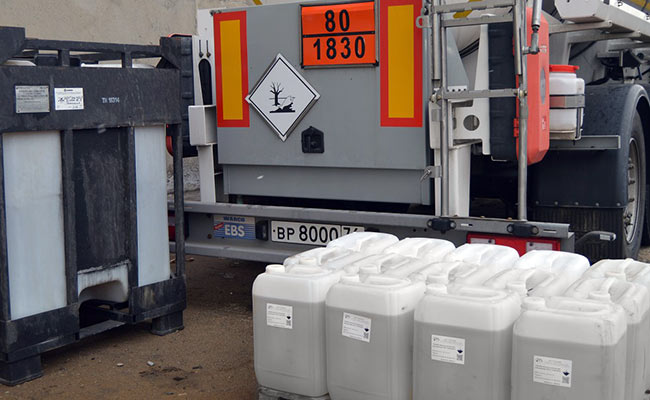
Sulfuric acid
Sulfuric acid is a strong dibasic acid with the chemical formula H2SO4. This acid is a clear, colorless, oily liquid. Chemically pure acid is highly hygroscopic, with beats. v. 1.841.
H2SO4 greedily absorbs water with the release of a significant amount of heat (it is the acid that needs to be added to the water, and not vice versa, since splashing is possible).
Sulfuric acid carbonizes many organic substances. In the cold, it dissolves active metals, when heated, it oxidizes Cu, Ag, Hg, as well as sulfur and coal.
The use of sulfuric acid
Sulfuric acid is of great importance in the national economy as a whole.
H2SO4 is the most important product of the heavy and chemical industries, and the scale of production of sulfuric acid in all countries is an indicator of the level of development of chemical. industry.
Sulfuric acid is used in many industries:
- in the production of fertilizers (superphosphate and others)
-
in the manufacture of artificial fibers
-
in the pharmaceutical industry
-
in the production of paints and dyes
-
for refining petroleum products
-
in the production of explosives
-
in glass production
-
in the production of a number of other acids (phosphoric, hydrochloric, etc.)
-
a number of other industries
In everyday life, sulfuric acid is most often found in lead-acid batteries.
Extreme care must be taken when working with sulfuric acid!
When it comes into contact with the skin, it causes painful, poorly healing burns and destroys tissues.
Sulfuric acid production
Now H2SO4 is produced by contact method. The process consists of several stages.
The raw material for about 80% sulfuric acid is pyrite (FeS2) and non-ferrous sulfides.