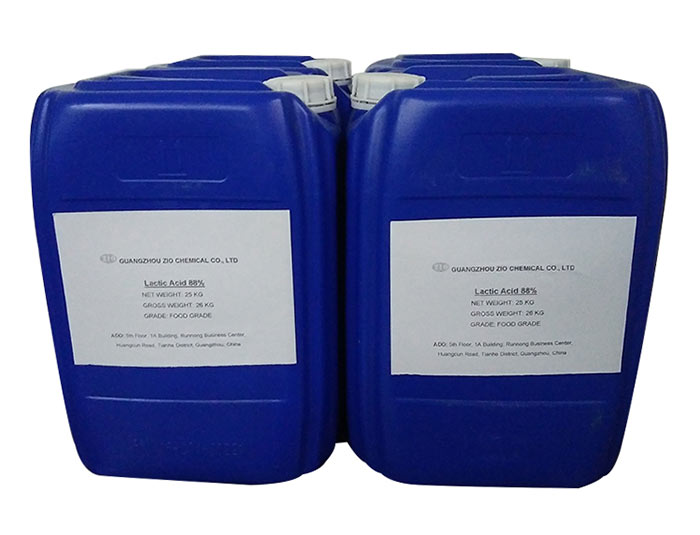
Lactic acid
Lactic acid is one of the most common carboxylic acids known for its salts and esters (lactates) and plays an important role in human metabolism.
There are 4 types of lactic acid:
pure or chemical
technical
conditionally food
pharmacological
Properties. Soluble in water, ether, ethanol, lactic acid is very hygroscopic, which is why there is no exact data on the melting point. The formation of lactic acid in the human body is directly related to the breakdown of glucose.
Appearance. A transparent, viscous liquid, odorless or with a slightly sour odor.
Applications
The most widespread use of lactic acid is in the food industry, as well as in the chemical production of polymers.
In the food industry, lactic acid is used for the following purposes:
Preservation: the additive inhibits the growth of bacteria and microorganisms, extending the shelf life of food.
Oxidation: lactic acid - acidity regulator, improves the taste and color of products.
Source of calcium.
In addition, lactic acid is used in pharmacology. It is added to anti-fungal agents, antimicrobial drugs, medicines to normalize microflora, disinfectants and cauterizers.
Currently, the popularity of bio-packaging has influenced the distribution of dishes made from polylactide material, which is based on lactic acid. Polylactide dishes and materials are environmentally friendly, renewable and natural.
-
What does it look like
viscous liquid, color from white-cream
-
Mass fraction of active substance
99,99%
Precautions and Transportation
Non-hazardous and non-flammable liquid (hazard class 4). Store in a dry, cool, shaded and ventilated area. Transport in original packaging by any means of transport in compliance with the general rules for the transportation of goods. It is recommended to work with the food additive E240 in a protective suit, glasses and gloves. Compliance with hygiene rules is imperative.